AI coding agents are changing the shape of software delivery.
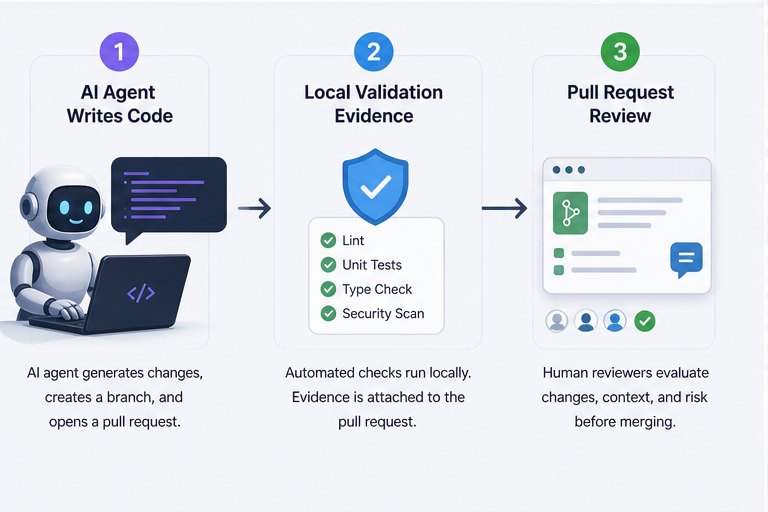
A developer can now ask an agent to inspect a repository, modify files, run commands, and prepare a pull request. GitHub's Copilot coding agent, for example, is designed to work from issues, create branches, make changes, and open PRs for review. Claude Code, Cursor, Codex, and similar tools are pushing the same shift into everyday development workflows.
That is real leverage. But it also creates a new bottleneck.
The bottleneck is no longer just writing code. It is knowing whether the generated code deserves trust.
PR Review Was Designed For A Slower World
The pull request became the default trust boundary for software teams because it made sense. A human developer worked on a change, opened a PR, explained the intent, and asked another human to review the diff.
That system assumed a certain pace: one developer, one branch, one change set, one reviewer looking at a manageable amount of context.
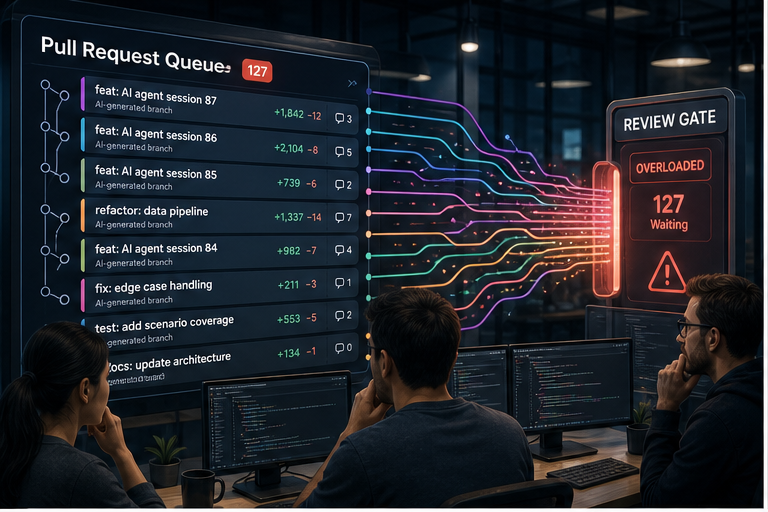
AI agents break that rhythm. Now one developer can produce multiple branches in a day. A small team can generate a volume of changes that used to require a much larger team.
That sounds like progress, and it is, but only if the review system evolves with it. If the team generates code faster than it can validate code, velocity turns into review debt.
"We Already Review PRs" Is Not Enough
Most engineering leaders have the same first response: we already have code review.
That answer is comforting, but incomplete.
Code review shows the final diff. It does not always show how the diff was created. It does not tell the reviewer what the agent checked, which files it inspected, which tests failed first, which commands were skipped, or what assumptions shaped the implementation.
A reviewer may see a clean-looking change without seeing the path that produced it.
That matters because AI-generated code often arrives with confidence. It can look polished even when it is wrong. It can follow local style while missing product context. It can create tests that verify the behavior it invented rather than the behavior the system actually needs.
The PR review process catches some of this. But if every agent-written change arrives with missing context, your senior engineers become the first real safety net.
That does not scale.
The New Engineering Bottleneck Is Trust
The agent era changes the question from "Can we create code faster?" to "Can we trust code faster?"
Those are different problems.
Code generation is a production problem. Trust is a systems problem. It touches developer workflow, CI, local validation, review culture, auditability, and engineering leadership.
GitHub's documentation for Copilot code review is careful about this boundary: Copilot can comment on code, but its review comments do not count as required approvals. That is the right mental model. AI can help inspect code, but accountability still belongs to the team.
If an agent wrote it, the team still owns it.
Senior Engineers Should Not Be The First Safety Net
The most expensive people in your engineering team should not spend their day reconstructing what an agent might have done.
They should not have to ask whether it ran the relevant tests, inspected the files that matter, understood the existing abstraction, changed a dependency without checking downstream impact, or created a passing test that only proves the wrong behavior.
Those questions should be captured as part of the workflow.
That does not mean more bureaucracy. Developers will reject anything that feels like a compliance tax. The right answer is lightweight evidence generated close to the work: commands run, checks passed, files touched, assumptions made, risks flagged, and what still needs human judgment.
What Engineering Teams Need Now
Teams adopting AI coding agents need a new layer between code generation and pull request review. That layer should answer a simple question: what happened before this PR reached me?
- The task or prompt the agent was given
- The files it inspected and changed
- The commands and tests it ran
- The checks that passed or failed
- The risky areas it touched
- The parts that still require human judgment
This is not about slowing AI down. It is about preventing fast code from becoming slow review.
Before The Pull Request
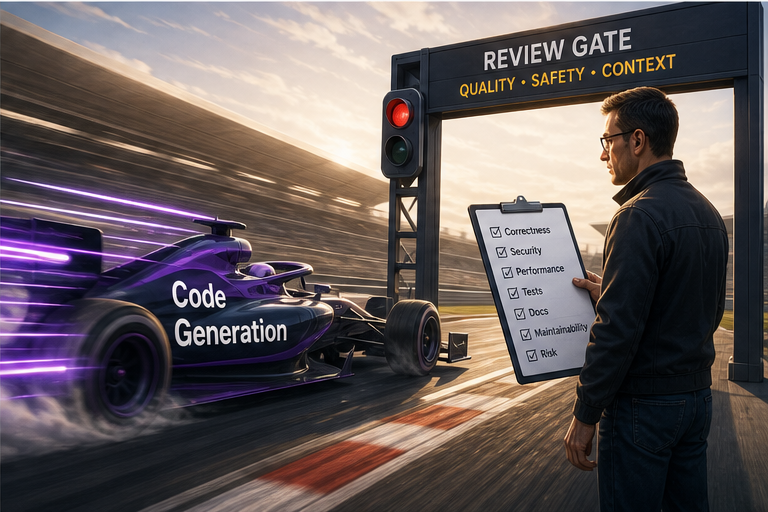
The future of engineering velocity will be decided before the PR.
By the time a reviewer opens the diff, the team should already know what was checked, what passed, what failed, and what still needs judgment.
A diff is not evidence. A green check is not the whole story.
If AI is going to write more of the code, engineering teams need better proof that the code is ready to be reviewed.